The Inner Workshop: Remodeling Your Living Room – Becoming Real in the Room
September 17, 2026
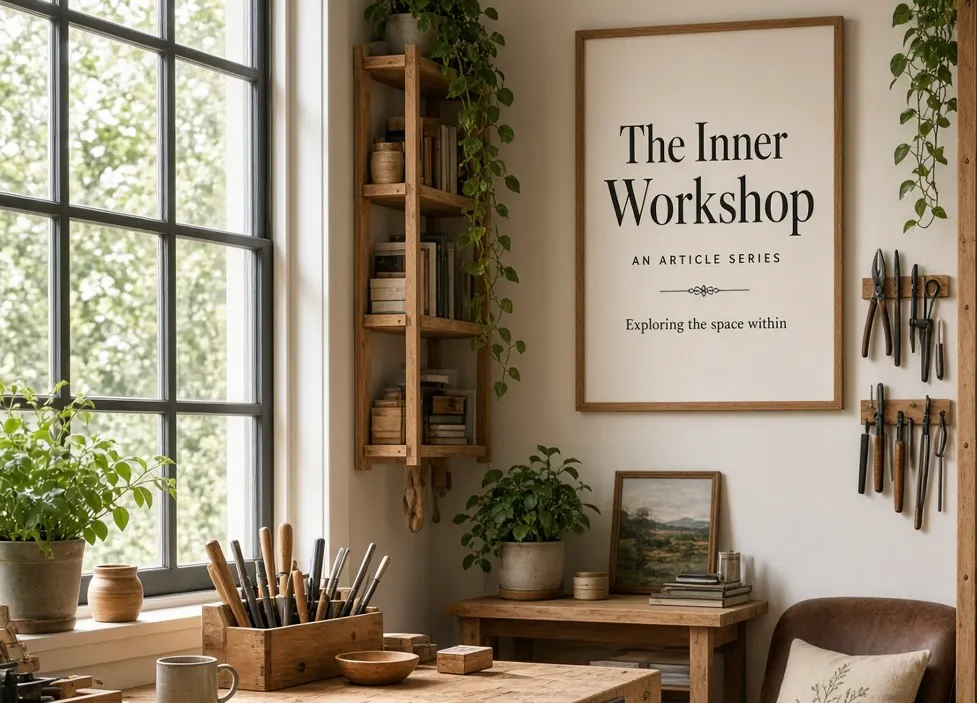
Welcome back to The Workshop. We’ve opened the Entryway, gone down into the Basement, and faced some of what’s been buried.
Now we come back upstairs.
Into the Living Room.
In The Inner Remodel, the Living Room is the room of connection. It’s where people gather. It’s where we sit across from one another, laugh, perform, explain, host, avoid, confess, and sometimes pretend everything is fine while quietly hoping nobody notices the stain under the rug.
The Living Room is tricky because it can look beautiful from the outside.
The couch is in place. The pictures are straight. The lights are warm. The conversation is polite.
But if we are honest, many of us eventually look around and realize something uncomfortable:
A lot of the furniture in here isn’t ours.
Some of it was rented. Some of it was borrowed. Some of it was handed down.
A chair called “Be useful.” A coffee table called “Don’t disappoint anyone.” A lamp called “Stay impressive.” A cabinet full of other people’s opinions that we started calling our personality.
This is the Living Room problem: we can spend years trying to feel at home in a life arranged around approval.
So let’s roll up our sleeves. No shame, no performance — just honest tools to begin remodeling the Living Room.
Step 1: Look Around the Room
Before you move anything, you have to see what’s there.
The Living Room is where we start noticing the visible patterns of our daily life: how we speak, how we connect, how we hide, how we make others comfortable, and how much of ourselves we allow into the room.
Tool: The Living Room Walkthrough
Sit quietly for 2–3 minutes and imagine yourself standing in the middle of your Living Room.
Ask yourself:
“What version of me do I usually bring into this room?”
Don’t force a polished answer. Just notice what comes up.
The helpful one. The funny one. The quiet one. The strong one. The agreeable one. The one who says “I’m fine” even when the Basement is leaking through the floorboards.
Write down the version of yourself you most often present to others.
Ah-ha moment: The version of you that shows up in the Living Room is not fake. It may simply be incomplete. The goal is not to shame the role. The goal is to notice when the role has become the whole identity.
Step 2: Identify the Borrowed Furniture
Once you see the room, you can begin asking what actually belongs.
A lot of what we live with emotionally was not consciously chosen. We inherited beliefs from family. We borrowed expectations from culture. We rented definitions of success from people who may not even know what home feels like.
Tool: The Furniture Check
Take out a notebook and make three columns:
RENTED | BORROWED | HANDED DOWN
Now list three pieces of emotional furniture you may be living with.
This could be:
A belief. A role. A routine. A definition of success. A way you try to be liked. A way you keep the peace. A version of yourself you perform because people expect it.
Then ask:
Did I choose this? Did I inherit this? Does this still help me feel at home?
Ah-ha moment: Familiar is not the same as true. Just because something has always been in the room does not mean it still belongs there.
Step 3: Notice What You Arrange for Others
The Living Room is where we often become interior decorators for everyone else’s comfort.
We soften the truth. We hide the mess. We make the room pleasant. We keep the conversation easy. We become experts at adjusting the lighting so no one has to see what’s really going on.
This is not because we are weak.
It is often because, at some point, connection felt conditional.
Tool: The Comfort Audit
Think of one relationship where you often feel like you have to manage the room.
Ask yourself:
What do I hide in order to keep this connection? What do I exaggerate? What do I minimize? What do I avoid saying? What version of me seems most acceptable here?
Now write one honest sentence you have not been saying.
Not an attack. Not a speech. Not a dramatic announcement.
Just one clean sentence.
Something like:
“I’m more tired than I’ve admitted.” “I don’t actually want that.” “I need more support.” “I’ve been pretending this doesn’t bother me.” “I’m afraid you’ll be disappointed if I tell the truth.”
You do not have to say it out loud yet. Just write it.
Ah-ha moment: Real connection cannot happen with a version of you that keeps leaving the room.
Step 4: Rearrange One Thing
Remodeling the Living Room does not mean throwing everything into the street.
Some furniture may stay. Some may move. Some may need to be returned to the person, family system, or culture it came from.
The work begins with one small act of ownership.
Tool: The One-Thing Move
Pick one piece of emotional furniture from your list.
Now ask:
What would it look like to move this six inches?
Not burn it down. Not confront everyone. Not reinvent your whole life by Tuesday.
Just move it six inches.
If the furniture is “I must always be useful,” maybe the six-inch move is resting without earning it.
If the furniture is “Don’t disappoint anyone,” maybe the six-inch move is saying "no" once without writing a legal defense.
If the furniture is “Stay impressive,” maybe the six-inch move is admitting you don’t know.
If the furniture is “Keep the peace,” maybe the six-inch move is telling the truth kindly.
Ah-ha moment: Ownership often begins with a small rearrangement. You do not have to change your whole life today. You just have to prove to yourself that the room can move.
Final Thought
The Living Room is where we begin to ask one of the most important questions in the entire remodel:
“Is this really mine?”
Not everything handed down is bad. Not everything borrowed is false. Not every role is a prison.
Some things were given with love. Some things helped you survive. Some things carried you through seasons when you did not yet know how to choose for yourself.
But a life that feels like home cannot be built entirely out of other people’s furniture.
At some point, you have to look around and decide what stays, what moves, and what no longer belongs in the house.
Next time in The Workshop: the Study — where we meet the Shouting Foe, the inner critic that keeps files, red pens, and receipts on every possible way we might fail.
Until then: What is one piece of emotional furniture in your Living Room that may no longer belong? Drop it in the comments, or simply write it down for yourself.
For the full fable about fear, grace, and coming home, plus the blueprint, grab The Inner Remodel at innerremodel.com.
Let’s keep remodeling — one honest room at a time.